
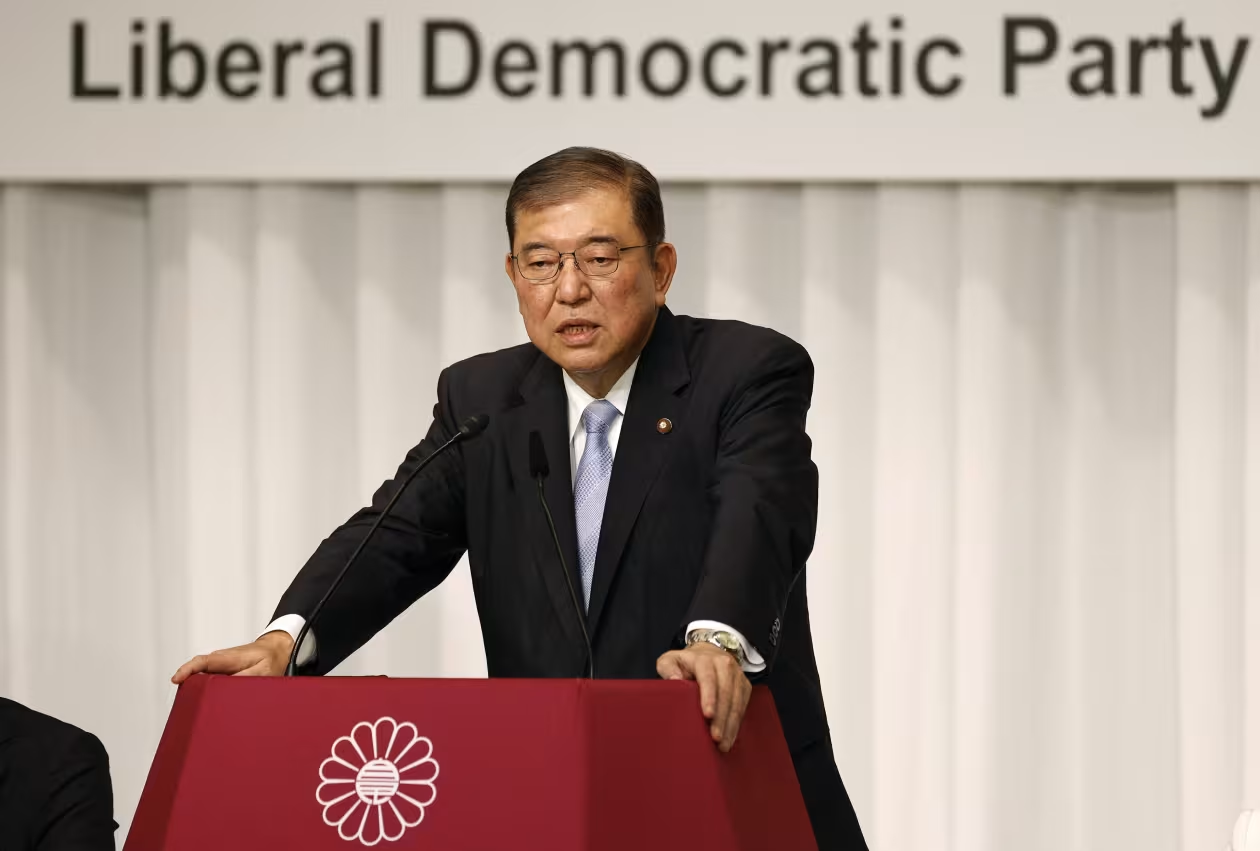
Shigeru Ishiba has been elected as the new leader of Japan’s ruling Liberal Democratic Party (LDP), positioning him to become the country’s next prime minister. His victory in a runoff against Sanae Takaichi marks a significant moment in Japanese politics, with nine candidates competing in this historic election.
Here are the top ten updates:
- Leadership Secured: Ishiba’s election as LDP leader effectively ensures his ascent to the prime ministership, given the party’s majority in parliament.
- Contested Election: He triumphed over hardline nationalist Sanae Takaichi in a runoff, showcasing one of the most unpredictable leadership contests in decades, featuring a record number of candidates.
- Political Landscape: As head of the LDP, which has dominated Japanese politics since World War II, Ishiba is virtually assured of becoming prime minister. The first voting round did not yield a majority winner, necessitating the runoff.
- Kishida’s Resignation: The move to replace current Prime Minister Fumio Kishida began after his resignation announcement in August, driven by scandals that led to historically low approval ratings for the LDP.
- Addressing Challenges: Ishiba faces the pressing issues of rising living costs and regional security threats, notably from an assertive China and a nuclear-armed North Korea.
- Vision for Japan: In his remarks to lawmakers, Ishiba expressed a desire for a “fairer and kinder Japan” and appeared emotional as the final results were announced.
- Political Controversies: Ishiba has a history of challenging party norms and has previously lost four leadership bids. He has stated this will be his final attempt at the leadership position.
- Progressive Policies: He advocates for socially progressive measures, such as allowing married couples to use different surnames, which faces opposition from more conservative party members.
- Legislative Goals: Ishiba’s progressive stance includes efforts to reform existing laws to reflect contemporary societal values, setting him apart from some of his peers.
- Transition of Power: Kishida and his Cabinet ministers are expected to resign on Tuesday, paving the way for Ishiba to be formally elected in a parliamentary vote and to establish a new Cabinet the same day.
Meanwhile, the main opposition party, the Constitutional Democratic Party of Japan, has struggled to gain momentum despite the LDP’s scandals. However, experts note that newly elected leader Yoshihiko Noda is pushing for a more centrist approach within the party, potentially reshaping the political landscape.


